Program Overview
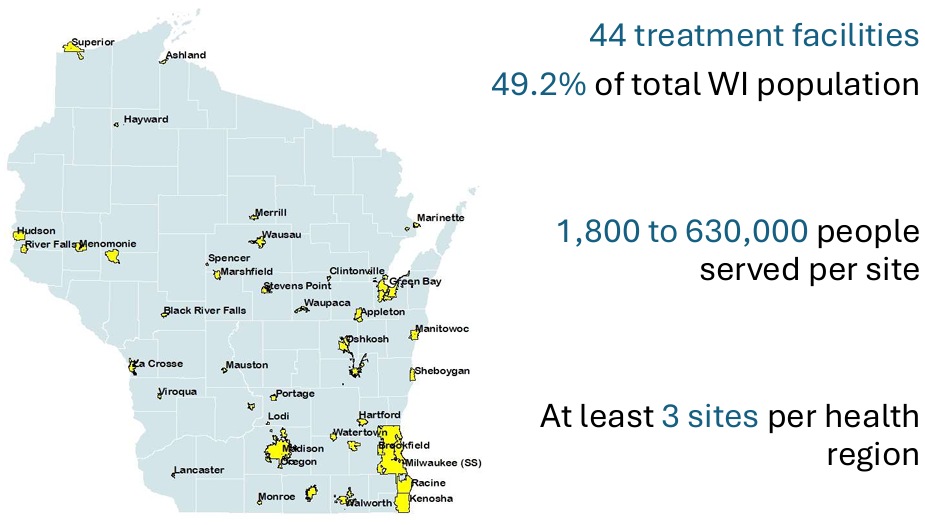
The Wisconsin Wastewater Monitoring Program (WWMP) is a partnership between the Wisconsin State Laboratory of Hygiene, Wisconsin Department of Health Services, McLellan Lab at University of Wisconsin-Milwaukee and Milwaukee Health Department Laboratory.



Wisconsin Wastewater Monitoring Program collects wastewater from municipal wastewater treatment facilities across Wisconsin to test for SARS-CoV-2 (the virus causing COVID-19) and other human pathogens, including:
- Influenza A & B
- Avian flu (H5N1),
- Respiratory Syncytial Virus (RSV)
- Norovirus
- Measles
This activity is referred to as Wastewater-Based Epidemiology (WBE), where wastewater is analyzed to determine presence and concentrations of pathogens in the community connected to the same sewer system. This data provides a population-level snapshot of pathogen levels and trends in a community.
Our Mission
To serve the State of Wisconsin as one of the pillars of public health by generating accurate, timely and actionable data to enhance public health readiness, guide resource allocation and help improve community well-being.
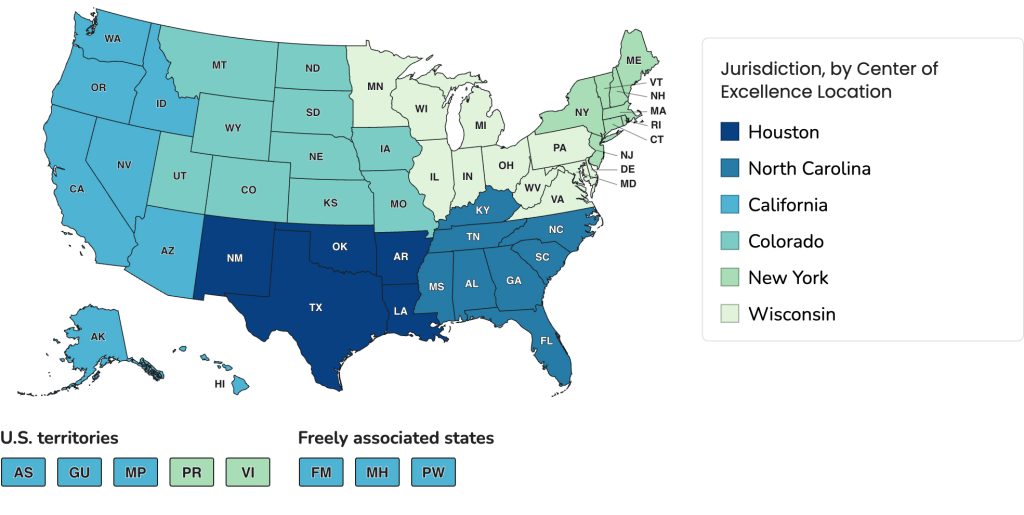
In July 2023, the Centers for Disease Control and Prevention (CDC) named the Wisconsin Wastewater Monitoring Program a national Center of Excellence (CoE) for the CDC’s Wastewater Monitoring Program. As a CoE, we serve as subject matter experts for wastewater monitoring programs and their partners in the following states: MN, WI, IL, IN, MI, OH, PA, WV, VA, MD, DE. Our mission is to also assist our partner states by offering any needed support, guidance, and training.
What do we do?
Wastewater monitoring has become an important and reliable source of data for COVID-19 in Wisconsin. Each week, thousands of Wisconsinites check the Wisconsin COVID-19 wastewater dashboard and are empowered to make informed health decisions, while hospitals and local public health departments are better prepared to respond to outbreaks. Similarly, the recently added Statewide Wastewater Respiratory Summary is a great resource for anyone interested in assessing their respiratory disease risk at a glance.
Additionally, we routinely sequence SARS-CoV-2 variants in wastewater samples to determine their presence and abundance in Wisconsin. Pathogens of concern that we can also monitor include:
- Carbapenem-resistant organisms
- C. auris yeast
- Mumps
- Rubella
- Hepatitis A
Large Event Monitoring
Public events involving mass gatherings and population movements can lead to spread of diseases within the local community, both during and after the event. Monitoring diseases during mass events via traditional methods is often challenging. For example, travelers may avoid healthcare due to cost, language barrier, unfamiliarity with local healthcare system or customs. Conducting wastewater monitoring of the event venue or the surrounding community can be a valuable and cost-efficient addition to traditional surveillance: Wastewater offers non-invasive sampling, does not rely on healthcare-seeking behaviors, and includes symptomatic and asymptomatic populations.
Our program conducted monitoring of wastewater from the Green Bay and De Pere community sewersheds in connection with the National Football League (NFL) Draft, which is an annual meeting of NFL franchises to select newly eligible players. In April 2025, NFL Draft was held at Lambeau Field in the Green Bay, Wisconsin, with over 600 thousand visitors attending. Wastewater was tested for a total of 12 pathogens, including those causing COVID-19, influenza, RSV, measles, hepatitis A, and norovirus. During the event, pathogen data was reported to public health within one day of sample collection to allow for rapid public health response. Fortunately, no concerning disease transmission was observed as a result of the event. However, hepatitis A wastewater detections immediately prior to, during and after the event led to a clinical case investigation by Brown County public health, that identified 3 hepatitis A positive people. Thus, wastewater monitoring was able to determine the presence of hepatitis A in the community before any clinical cases manifested.
In addition to the 2025 NFL Draft, our program also conducted wastewater monitoring of the 2024 Republican National Convention in Milwaukee, Wisconsin. Our findings have recently been published together with the results from the Democratic National Convention monitoring in Chicago, Illinois.